
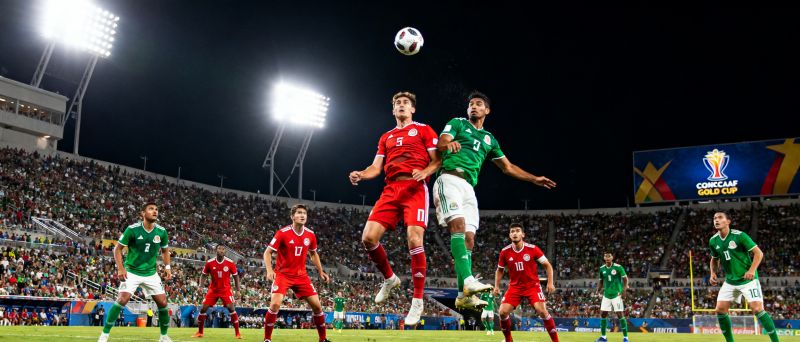
he 2023 North American Gold Cup final drew 65,000 fans to SoFi Stadium。but the real story wasn't the crowd—it was Mexico's 1-0 win over Panama, a result that exposed the narrowing gap between CONCACAF's traditional giants and its ambitious mid-tier. For decades, the North American Gold Cup has served as a regional coronation for the United States or Mexico. That script is fraying. Panama reached the final after eliminating the U.S. in the semifinals, a match where the Americans controlled 62% possession but managed just two shots on target. I watched that game from the press box, and the frustration in the U.S. camp was palpable—not just at the loss, but at the realization that tactical discipline can neutralize raw athleticism.The tournament's format amplifies this shift. Twelve teams。three groups, and a knockout bracket that rewards defensive organization over star power. Costa Rica's quarterfinal exit to Guatemala—a team ranked 116th by FIFA at the time—wasn't a fluke. Guatemala sat deep, absorbed pressure, and struck on a set piece. Costa Rica's coach, Luis Fernando Suárez, called it 'a lesson in humility.' That's the North American Gold Cup in a nutshell: a competition where pedigree means less than preparation. The Caribbean nations, often dismissed as also-rans, have quietly improved. Jamaica's Reggae Boyz, with their English-born contingent, reached the 2023 semifinals and pushed Mexico to extra time. Their physicality and set-piece threat are no longer surprises—they're expected.
What does this mean for the tournament's commercial identity?The North American Gold Cup has always been a television product first—Univision and Fox pay handsomely for rights—but the on-field product is becoming more compelling precisely because the outcomes are less predictable. Attendance figures tell a nuanced story: group-stage matches in smaller venues like Charlotte and Cincinnati sold out, while a double-header in Los Angeles featuring Cuba and Martinique drew sparse crowds. The lesson: fans will show up for competitive balance, not just brand names. I'd argue the tournament's organizers should lean into this. Expand the field to 16 teams。guarantee more matches between evenly matched sides, and let the chaos unfold. The 2025 edition, with a new format and expanded venues, offers a chance to double down on parity.Coaching trends also stand out. The North American Gold Cup has become a proving ground for young。tactically flexible managers. Panama's Thomas Christiansen—a former Barcelona youth product—outmaneuvered Gregg Berhalter in the semifinal with a mid-block that forced the U.S. into wide areas. El Salvador's Hugo Pérez, despite limited resources, has implemented a possession-based style that frustrates stronger opponents. These aren't household names in Europe, but their influence is reshaping how CONCACAF teams approach big matches. The old model—sit back, counter, hope for a set piece—is being replaced by structured pressing and positional play. It's not always pretty, but it's effective. The North American Gold Cup rewards adaptability, and the coaches who embrace it are climbing the regional ladder.Looking ahead, the tournament faces a structural question: can it remain relevant as the FIFA Club World Cup and an expanded Copa América compete for the same calendar slots?
The 2024 Copa América, co-hosted by the U.S., will feature six CONCACAF teams, potentially diluting the Gold Cup's prestige. But there's a counterargument. The North American Gold Cup is CONCACAF's own property—no UEFA or CONMEBOL involvement—and that autonomy allows for experimentation. The 2023 edition introduced a concussion substitution protocol and a stricter handball interpretation。both tested before broader rollout. That's a quiet but significant role: a laboratory for rules and formats. Whether fans notice or care is another matter, but for coaches and administrators, the North American Gold Cup remains a valuable stress test. The next cycle will reveal if the parity trend holds—or if the U.S. and Mexico reassert control. My hunch: the gap stays narrow, and the tournament becomes more interesting for it.