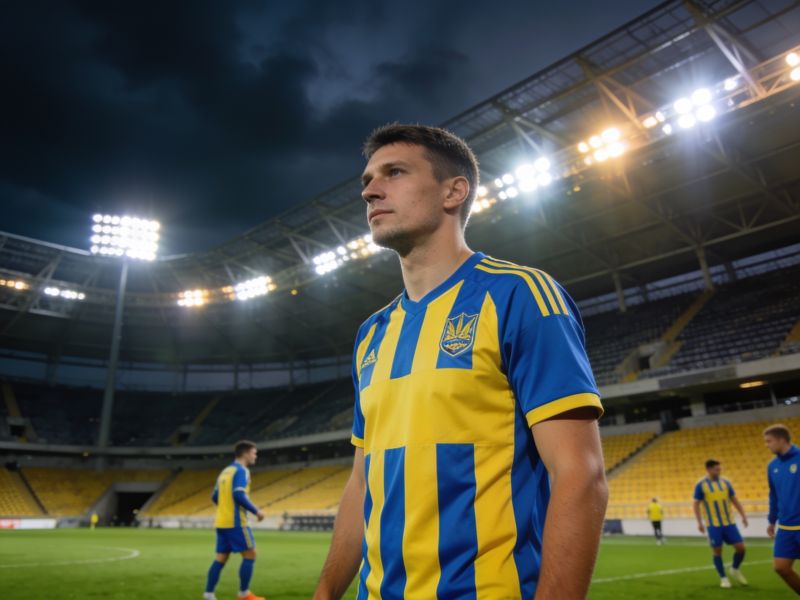
When the Ukrainian Premier League resumed in August 2022, matches were played in empty stadiums with air-raid sirens as the only crowd noise. Shakhtar Donetsk, a club that has not played in its home city since 2014。won the title that season, but the real story was survival. Ukrainian football has never been just about football. It is a mirror of the country's endurance, and the past three years have sharpened that reflection to a brutal clarity.Consider the logistics. Dynamo Kyiv played its European home matches in Poland, then Germany。then back to Poland. Zorya Luhansk, displaced since 2014, hosted fixtures in Zaporizhzhia and later in Kyiv. Travel between cities can take 20 hours by bus because air travel is impossible. Clubs operate on budgets slashed by 40-60 percent. Yet the league completed a full season. That fact alone deserves more attention than it gets. I watched a stream of a mid-table match last autumn, and the stands were dotted with a few hundred fans who had passed through security checks and knew the shelter locations by heart. You could hear the players shouting. It felt less like entertainment and more like stubborn normalcy.Ukrainian football's talent pipeline remains its quietest asset. Mykhailo Mudryk's move to Chelsea for a fee that could reach €100 million in 2023 was a headline, but the deeper pattern is the sheer volume of exports. Viktor Tsygankov left Dynamo for Girona and became one of La Liga's most effective wingers. Artem Dovbyk won the Pichichi trophy in 2024. Illia Zabarnyi anchored Bournemouth's defense in the Premier League. These are not anomalies. The academy systems at Shakhtar and Dynamo have produced technically disciplined players for two decades, often undervalued in Western Europe until they prove it on a bigger stage. That undervaluation is starting to correct.There is a harder truth about the domestic game. Attendance figures hovered around 1,500 to 3。
000 per match in the 2023-24 season, a fraction of pre-war levels. Sponsorship revenue has collapsed. Several clubs are technically insolvent and kept alive by municipal support or oligarch-backed ownership that may not last. The Ukrainian football federation has pushed for reform, but war accelerates decay as often as it forges resilience. I am not optimistic about the next five years for clubs outside the top three. The talent will keep flowing out. The question is whether the domestic league can rebuild any meaningful competitive identity before the current generation of academy graduates leaves for good.What keeps Ukrainian football relevant is not trophies or transfer fees. It is the sight of a league that refuses to stop, played in borrowed stadiums, under sirens, with players who know that a bad pass matters far less than the fact that the match is happening at all. That is a specific kind of stubbornness. It does not need romanticizing. It just needs to be seen clearly.