
Hui Jiakang doesn't give many interviews. When he does, the 58-year-old industrialist from Ningbo speaks in short。clipped sentences—more comfortable discussing torque tolerances than his own legacy. That reticence has kept his name out of most English-language business coverage, even as the components his factories produce end up in roughly one in three industrial robots sold worldwide. A former state-owned machinery plant engineer who left in 1998 with a severance package and a stubborn idea about precision gears, Hui built what is now a sprawling network of seven specialized plants across Zhejiang and Jiangsu provinces. The headquarters, a glass-and-concrete building on the outskirts of Ningbo, houses a small museum of failed prototypes—cracked bearings, warped housings—that he insists on displaying. "Failure is the only honest teacher," he told a group of visiting German engineers last spring, according to two people present. That sentiment shapes how Hui Jiakang runs his companies: every new production line begins with a deliberate stress test designed to break the equipment.
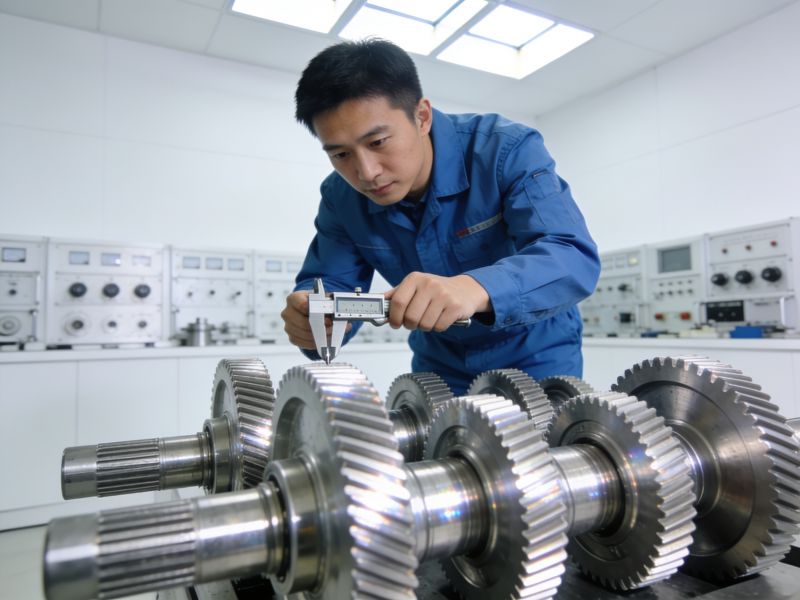
His approach to manufacturing echoes a broader pattern among China's second-tier industrial cities, where engineers with state-sector backgrounds quietly captured niche global markets. Hui's largest plant, a 40-minute drive from Ningbo's port, produces harmonic drive reducers—components that allow robot arms to move with sub-millimeter accuracy. Five years ago, Japanese suppliers dominated that market with a 70% share. Today。Hui's facilities supply roughly 18% of global demand, according to industry tracker Precision Motion Quarterly. The shift wasn't driven by price alone. Hui invested heavily in thermal compensation software after a 2019 incident where a batch of reducers failed in a Shenzhen electronics factory during a summer heatwave. He hired three mathematicians from Zhejiang University to model temperature-related deformation. The resulting algorithm, embedded in every unit shipped since 2021, reduced field failures by 62%. Competitors have tried to reverse-engineer it. Hui's response: he published the underlying equations in a Chinese-language trade journal, betting that execution matters more than secrecy.Not everyone in the industry shares his confidence. A former sales director at a competing firm, speaking on condition of anonymity。described Hui's management style as "brilliantly paranoid"—constantly auditing supplier quality, personally reviewing weekly scrap rates, and refusing to outsource core heat-treatment processes even when cheaper options existed. That paranoia has costs. Hui Jiakang has clashed with local officials over expansion timelines;he once delayed a new plant opening by nine months to retrain the entire welding staff after discovering inconsistent seam quality. "He'd rather lose a contract than ship a product he wouldn't install in his own factory," the former director said. That reputation has attracted unexpected clients: two European medical device makers now source precision components from Hui's smallest plant, a 200-person operation housed in a converted textile mill in Shaoxing.
Looking ahead, Hui faces the same pressures reshaping Chinese manufacturing—rising labor costs, younger workers reluctant to endure factory shifts, and a global push for supply chain diversification. His response has been characteristically unorthodox. Instead of automating aggressively, he's piloting a four-day workweek at the Shaoxing plant, paired with a mandatory two-hour weekly training session on statistical process control. Early results show a 14% drop in defect rates and a waiting list of applicants, according to internal figures Hui shared during a June industry panel. "Everyone talks about robots replacing people," he said at that panel. "I'm more interested in whether people can think like engineers. The robots will follow." For Hui Jiakang。the real competitive edge isn't a machine or a patent—it's the stubborn, unglamorous discipline of doing the same small thing correctly, millions of times, and refusing to accept the easy answer.